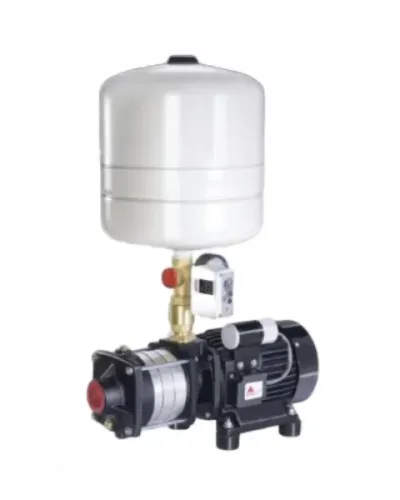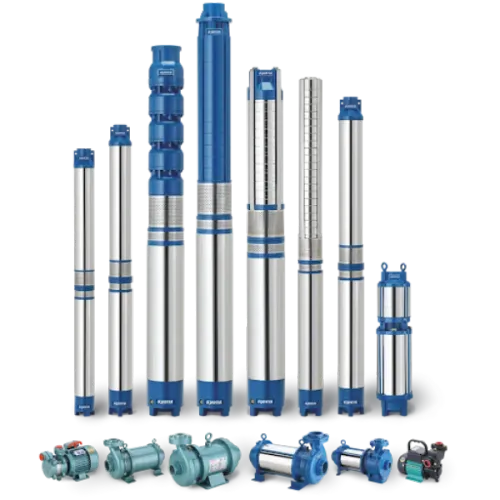

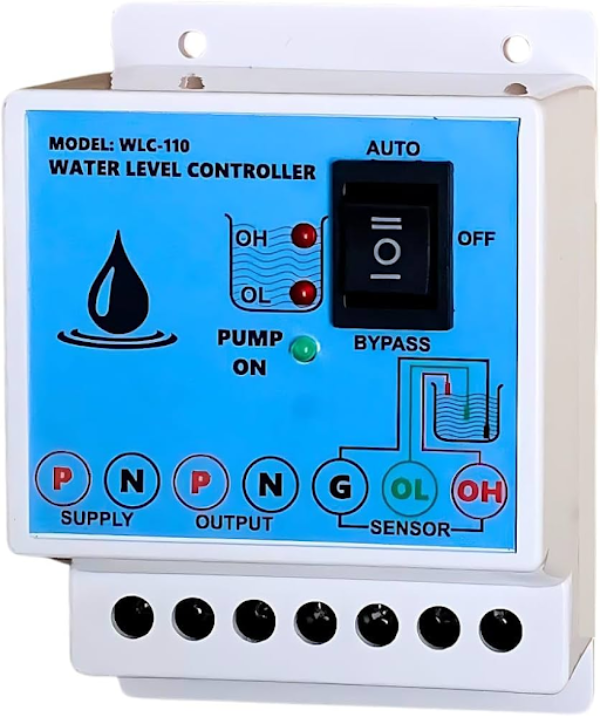
Water tanks are essential components of many residential, commercial, and industrial water-supply systems. Yet manually monitoring tank levels can result in overflow, unnecessary pump operation, or dry running. Water Level Controllers automate this process by monitoring water levels and controlling pump operation accordingly.
Automation is particularly useful where tanks need frequent filling or where staff cannot continuously supervise the pumping system.
What a Water Level Controller Does
The controller receives information from sensors or level-detection devices installed at selected points. Depending on the system design, it can start a pump when water drops below a specified level and stop it when the tank reaches the desired upper limit.
This can help reduce:
- Tank overflow
- Water wastage
- Unnecessary pump operation
- Manual monitoring
- Dry-running risk
- Operational inconvenience
The precise functions depend on the controller configuration and associated pumping equipment.
Where Automatic Level Control Is Useful
These systems can be installed in:
- Residential buildings
- Commercial complexes
- Industrial facilities
- Hotels
- Hospitals
- Educational institutions
- Housing societies
- Utility water-storage systems
For facilities with underground and overhead tanks, level controls can coordinate water transfer between storage points.
Why Sensor Placement Matters
Reliable automation depends heavily on correct sensor positioning. Sensors should correspond with the desired minimum and maximum operating levels.
Incorrect positioning can cause frequent pump cycling, insufficient storage, or delayed shutdown.
Electrical protection also matters because pumps may operate for long periods. Control systems should therefore be selected with the motor rating and operating environment in mind.
In Pune, where commercial buildings, residential societies, manufacturing facilities, and institutional properties may depend on stored water, automatic level management can simplify routine operations.
Sanas Engineering supports water-management and pumping requirements where automation can be integrated with the wider supply arrangement.
Properly selected Water Level Controllers can make tank management more systematic while helping protect pumping equipment from avoidable operating conditions. Before installation, the tank configuration, pump capacity, level ranges, electrical supply, and operating sequence should be reviewed.