
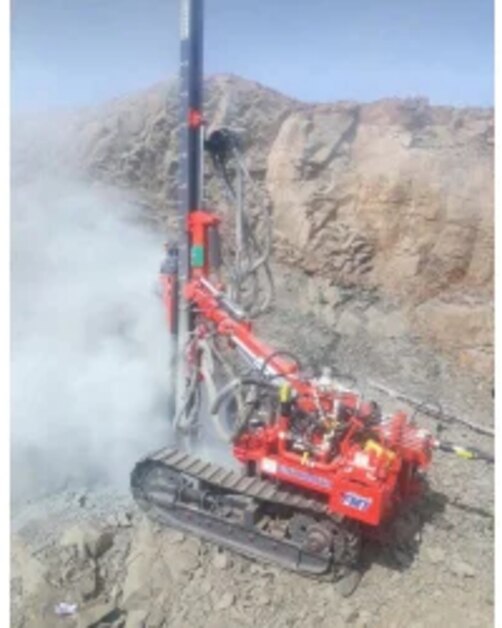
Rock drilling becomes necessary when a project must penetrate natural rock rather than simply cut concrete, loosen soil or remove surface debris. By identifying the ground condition, selecting the right drilling method and checking the finished holes, you can avoid slow production, uncontrolled vibration, groundwater problems and unusable anchor or foundation bores.
Key takeaways
- Use rock drilling for bedrock, buried rock, boulders or hard strata blocking excavation.
- Match the method to rock strength, fractures, hole diameter, depth and required accuracy.
- Specify alignment, depth, diameter, casing, groundwater controls and hole-verification records.
- Compare quotes by method, metres drilled, casing, disposal, standby time and restoration.
When does a project require rock drilling rather than concrete drilling or excavation?
Rock drilling is the controlled creation of holes or broken-rock access in natural rock, not simply any hard material. Choose it when exposed bedrock, buried rock, boulders, hard strata or rock cuttings prevent construction excavation from reaching the required depth, alignment or production rate.
Concrete drilling versus rock drilling matters because concrete drilling targets a manufactured slab, wall or foundation, often with known reinforcement. Rebaring repairs or drills around reinforcement; wall sawing and floor sawing make linear cuts. Core drilling removes a cylindrical sample or opening, while diamond core drilling in rock supports investigation or precise, low-impact penetration.
Natural rock can vary sharply in hardness, fractures and groundwater, so concrete tooling is not automatically suitable.
Rock drilling is usually justified for:
- Foundation sockets, anchor holes and micropiles where rockhead or competent rock lies below soil
- Utility trenches, shafts and tunnels where excavation cannot remove deep or confined rock
- Road and railway cuts where boulders or hard strata block the formation level
- Pilot holes, drainage holes and blast holes requiring controlled depth or alignment
Match the method to access and ground: rotary drilling suits softer or fractured rock; rotary-percussive and top-hammer drilling suit accessible shallow or medium-depth holes; down-the-hole hammers suit deep, hard-rock holes; diamond coring suits intact samples and accurate investigation. Excavators, hydraulic breakers, wire saws, trenching and controlled blasting can remove bulk rock when drilling is inefficient.
Do not drill for shallow loose fill, fragile heritage structures, no-rig-access locations or vibration-sensitive sites. Use non-destructive diamond coring when preserving the surrounding structure matters.
How can you identify the ground and choose the correct drilling method?
Rock identification before drilling starts with records and trial holes, not the first hard refusal. Exposed angular fragments and continuous core suggest rock; rebar, aggregate and mortar joints indicate reinforced concrete or masonry, while layered fill and variable resistance indicate compacted soil or mixed ground.
A hard bit refusal does not prove competent bedrock: boulders, cemented soil and weathered seams behave the same way.
Use these checks before selecting equipment:
- Review geological records and trial-hole findings for rockhead elevation and buried concrete.
- Log rock cores for lithology, hardness, weathering, discontinuities, fracture infilling and groundwater.
- Calculate Rock Quality Designation (RQD) by dividing the combined length of intact core pieces at least 100 mm long by the core-run length, expressed as a percentage. RQD compares rock mass quality; fracture orientation and infilling still control performance.
- Treat dust, vibration, deviation and falling penetration as warning signs, not proof of a particular ground type.
| Method | Best fit | Main limitation |
|---|---|---|
| Rotary drilling | Softer, weathered or fractured formations | Slow progress in hard competent rock |
| Rotary-percussive drilling | Mixed soil, boulders and rock | More vibration, dust and tooling wear |
| Top-hammer drilling | Accessible shallow and medium-depth holes | Hole deviation increases with depth and fractures |
| Down-the-hole hammer drilling | Deep hard-rock holes | Compressed air carries dust and cuttings beyond the work zone |
| Diamond core drilling | Intact samples, accurate investigation or low-impact penetration | Slower and dependent on water and core recovery |
The wrong choice brings slow penetration, rapid bit wear, hole deviation or excessive vibration.
What must be specified and checked before drilling starts?
Set the hole geometry before mobilising: define drill diameter and depth selection, inclination, orientation, coordinates and spacing for each anchor, pile, blast hole, drainage hole, utility route and foundation. A drawing must show tolerances, socket length, casing allowance and clearance from reinforcement or services.
1. Build a rock drilling site assessment checklist from geological and structural records, then verify it with trial holes. Map lithology, fractures, weathered zones and groundwater; locate buried utilities through utility clearance records and scans, and mark overhead cables.
Check working height, rig access, ground bearing, and proximity to foundations, retaining walls, roads, railways and occupied structures.
2. Request the permit set before work starts: approved method statement for rock drilling, utility-clearance records, exclusion zones, emergency contacts, flyrock protection and a vibration monitoring and noise monitoring plan. Specify respirable-silica controls, wet-vacuum slurry recovery, berms or settling tanks, spoil containment and disposal; uncontrolled slurry can block drains, foul pumps and create slip hazards.
3. Match the plant to the site. Confirm the rig footprint, compressor capacity, lifting capacity, power source, water supply, dust extraction, spoil-handling route and clearance for rods, casing and operators. Include temporary casing or drilling-fluid equipment where fractured or weathered rock could ravel before grout or concrete placement.
4. Record controls for vibration, noise, flyrock, silica dust, slurry, spoil and drilling beside live services. Stop work if a marked service differs from the records, a hole deviates toward a structure, or monitoring exceeds the project limit; revise the method before continuing.
How do groundwater, casing and hole verification affect the result?
Groundwater, casing and hole verification determine whether a drilled hole remains usable and performs as designed. Follow the work from survey and marking to rig setup, pilot drilling, production drilling, cleaning, inspection and handover; fractured or weathered rock can ravel before reinforcement, grout or concrete is placed.
- Mark coordinates, orientation and socket or borehole depth, then record the rig setup and pilot-hole conditions.
- Advance temporary casing through loose overburden or unstable rock. Use casing advancement or controlled drilling fluid for drilled shafts and micropiles when the walls cannot stand open.
- Record groundwater during rock drilling. Water entering through transmissive fractures can require temporary dewatering, packers, water-pressure testing, staged pumping, casing or a submersible pump.
- Clean the hole and document cuttings, sediment and fluid returns. Loose material or drilling smear at a pile base reduces side resistance and end bearing.
- Verify diameter, depth, alignment, cleanliness, stability and actual rock-socket length using cleanout records, weighted sounding or downhole inspection where specified.
- For a dewatering or water-supply well, specify screen slot size and filter-pack gradation, place the pack correctly, and complete well development after drilling. Surging, airlifting or pumping removes fines; pumping tests then show yield, drawdown and sand production.
- Before handover, obtain anchor grout records and complete the specified proof or performance testing. Apply the project specification’s acceptance criteria, including creep limits where required, rather than accepting a hole solely because it reached design depth.
How should you compare rock-drilling contractors, quotations and final costs?
A comparable rock drilling quotation starts with the same site brief for every bidder. Use this rock drilling quotation checklist:
- Rock type, hole quantity, diameter, depth, inclination and coordinates
- Access limits, rig footprint, working hours and water constraints
- Broken-ground risk, casing needs, groundwater controls and spoil-disposal requirements
Ask for separate rates for these rock drilling cost factors:
| Mobilisation | Transport, permits and crew travel | Distance and site access |
|---|---|---|
| Setup | Levelling, anchoring and protection | Uneven ground or restricted space |
| Drilling | Price per metre, not only per hole | Depth and penetration rate |
| Tooling and casing | Hard-rock bits, diamond tools and casing changes | Abrasive, fractured or unstable rock |
| Groundwater and spoil | Pumping, containment, loading and disposal | Inflow, slurry and disposal classification |
| Relocation and standby | Rig moves, waiting and interruptions | Multiple coordinates or delayed access |
For contractor comparison for rock drilling, require evidence of diameter and depth capability, penetration rates, deviation control, tooling type, relevant rock experience, rock drilling inspection records, safety documentation, silica controls and vibration-management procedures.
A concrete-cutting rig, operator or diamond blade is not automatically suitable for natural rock; rock hardness, fractures, depth and cuttings transport demand different equipment.
Sanas Engineering Khedshivapur is useful when drilling must be coordinated with concrete work, dewatering or pumping support rather than treated as an isolated bore.
Close the contract with handover records covering drilled metres, bit and casing changes, groundwater observations, cleaning results, hole measurements, spoil quantities, monitoring readings and unresolved deviations.
Frequently asked questions
When does a project require rock drilling rather than concrete drilling or excavation?
Use rock drilling when natural bedrock, buried rock, boulders or hard strata prevent excavation from reaching the required depth, alignment or production rate. Concrete drilling applies to manufactured concrete, while ordinary excavation suits soil and weathered material that excavators can remove safely.
How can you identify the ground and choose the correct drilling method?
Review geotechnical logs, trial pits, exposed faces and rock cuttings, then assess rock strength, weathering, fractures, groundwater and required hole dimensions. Select rotary, rotary-percussive, down-the-hole hammer or other equipment according to those conditions and the project’s accuracy, vibration and access limits.
What must be specified and checked before drilling starts?
Put the hole diameter, depth, inclination, coordinates, tolerance, drilling method, access arrangement, spoil handling, vibration limits, working hours and safety controls in the scope. Confirm underground services, permits, platform stability, equipment access and the contractor’s measurement procedure before mobilisation.
How do groundwater, casing and hole verification affect the result?
Groundwater can destabilise the hole and carry cuttings into the opening, so define casing, flushing fluid, sump or dewatering controls in advance. Verify the finished hole’s depth, diameter, position, inclination, cleanliness and obstruction status with documented measurements before installing anchors, piles, pipes or pumps.
How should you compare rock-drilling contractors, quotations and final costs?
Compare the quoted drilling method, diameter, depth, production assumptions, mobilisation, casing, flushing, spoil disposal, standby, access preparation, water management, testing and reinstatement. Ask for unit rates and exclusions, then record actual metres, casing length, delays, consumables and extra rock zones for the final account.